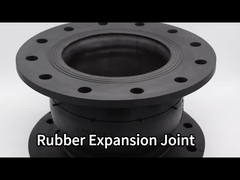
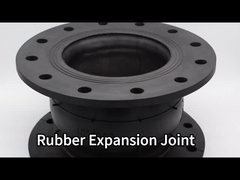
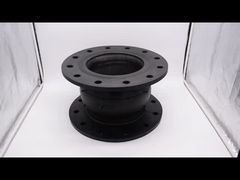
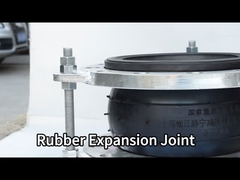
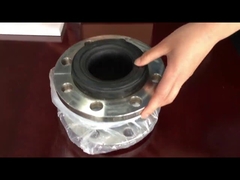
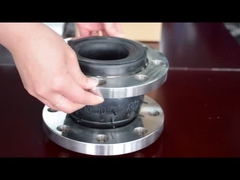
Brief: Curious about how to properly install the flange on a large synthetic rubber expansion joint? This video provides a clear, step-by-step walkthrough of the installation process, demonstrating how the metal-reinforced compensator and its limiting device work together to handle pipeline movements and transfer forces effectively.
Related Product Features:
Compact and lightweight design for easy installation and maintenance.
Compensates for axial, horizontal, and angular displacement in pipelines.
Reduces structural noise transmission with strong vibration damping capacity.
Suitable for a wide range of media including water, oil, acid, and alkali.
Operates effectively across temperatures from -20°C to 140°C.
Features a robust metal reinforcement for enhanced pressure resistance.
Available in nominal diameters from DN15 to DN3000 to fit various applications.
Ideal for connecting pumps and valves, transferring force via the integrated limiting device.
Domande frequenti:
What is the purpose of the limiting device on this rubber expansion joint?
The limiting device controls and restricts the positioning displacement of the joint when used in pipelines with movement requirements or when connected to pumps and valves, effectively transferring forces and preventing over-extension or compression.
What types of pipeline movements can this compensator handle?
It can accommodate axial extension and compression, horizontal displacement, and angular deflection, allowing for flexibility and movement without being limited by pipe misalignment or uneven flange surfaces.
What are the key benefits of using this synthetic rubber expansion joint?
Key benefits include excellent pressure resistance due to its spherical structure and metal reinforcement, superior shock absorption and noise reduction, and the ability to compensate for various movements, which helps prevent damage and costly downtime in piping systems.